
Safety Guidelines For Setting Up Commercial Inflatables At Outdoor Events
Understanding Key Risks Of Commercial Inflatables Outdoors
Outdoor events often feature commercial inflatables, from bounce houses to obstacle courses, as a means to provide entertainment for guests of all ages. However, these large and complex structures come with unique challenges that event organizers must carefully assess. Weather poses one of the most unpredictable risks—strong winds or sudden gusts can destabilize even meticulously anchored inflatables. Uneven or soft ground introduces additional hazards, such as tripping or shifting anchor points. The presence of underground utilities and nearby obstacles, like fences or trees, must be addressed to prevent accidental damage or restricted emergency access. Crowds present their own set of risks, especially with younger participants, making it crucial to evaluate maximum occupancy, the suitability of specific inflatables, and the logistics of queuing and supervision.
A detailed risk assessment is essential before any installation takes place. This involves a careful review of the site’s layout, attendee demographics, anticipated weather, and all relevant manufacturer’s safety instructions. By thoroughly mapping these factors, organizers can decide if the inflatable equipment is appropriate for the event or if modifications and extra precautions are required. Establishing this risk-aware foundation is a fundamental step toward ensuring a safe, enjoyable experience for all attendees.
Site Preparation And Layout Planning
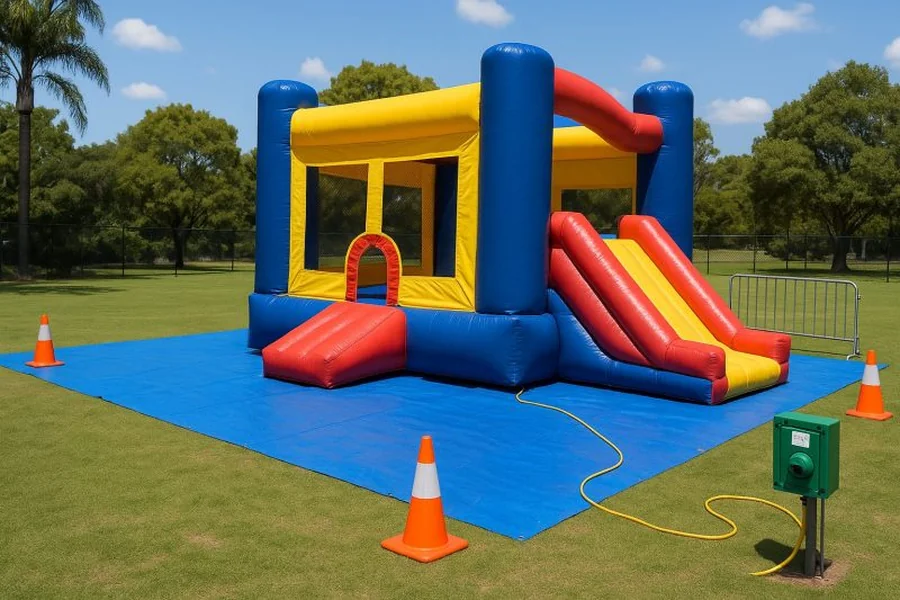
Effective site selection and layout planning are foundational to maintaining safety during outdoor inflatable operations. The ground where inflatables will be set up should be flat, stable, and free of obstacles or debris. Sloped or overly soft areas increase the risks of tipping and create hazards near anchor points. It is vital to maintain generous clearance around each inflatable, avoiding proximity to obstacles such as power lines, trees, tents, or busy pathways. For larger events, separating inflatables based on age groups—such as reserving certain units for younger children—can help mitigate the risk of injury and manage crowd flow more effectively.
Pathways for entry and exit should be wide, clearly marked, and unobstructed to prevent crowding, bottlenecks, or interference with operational duties. Clearly designating staff zones and safe queuing areas contributes to greater organization, allowing staff to supervise effectively. Organizers should also work with venue managers to confirm the precise location of any underground infrastructure before staking or anchoring equipment, thereby preventing accidental utility strikes and ensuring the stability of the installation.
Anchoring, Installation, And Weather Monitoring
Proper anchoring lies at the heart of inflatable safety. Every anchor point outlined by the manufacturer must be utilized, using the recommended stakes or ballast for the inflatable’s size and the anticipated weather. Cutting corners—such as skipping anchors or using makeshift equipment—increases the chance of hazardous movement. Installation teams should be well trained to recognize and uphold these standards every time they set up an inflatable.
The correct positioning and protection of blowers, extension cords, and power sources are also essential. Power supplies should be kept dry, safely distanced from high-traffic areas, and protected from accidental disturbance. Weather monitoring must continue throughout the event; organizers should track forecasts and use practical tools, such as handheld anemometers, to measure wind on-site. Exceeding manufacturer-specified wind speed limits is never permissible. For those seeking professional support or best practice advice on product selection and setup, reviewing resources from companies like Got Inflatables can provide up-to-date insights into both technical and safety considerations.
Supervision, Operating Rules, And Inspection Routines
Once an inflatable is installed, consistent oversight guarantees ongoing safety. Qualified attendants must be present to supervise access and enforce capacity restrictions, ensuring only the permitted number and age of users are on the equipment at any time. Clear rules—such as requiring users to remove shoes, restrict climbing on walls, and avoid bringing sharp objects—should be posted and explained to every participant to minimize the risk of accidents.
Pre-opening inspections are critical: staff should thoroughly check seams, anchor points, blower covers, entryways, and safety mats for any defects or wear. Regular walk-throughs during the event can help identify emerging issues, such as loose stakes or shifting mats. Some organizers maintain a log for incident and near-miss reporting, which can be used to improve future safety protocols. Adopting these inspection and supervision routines transforms commercial inflatables from a potential risk into a managed, secure feature that can enhance the enjoyment of any outdoor event.