
What Happens When Trucks Hit the Road With Improperly Loaded Cargo?
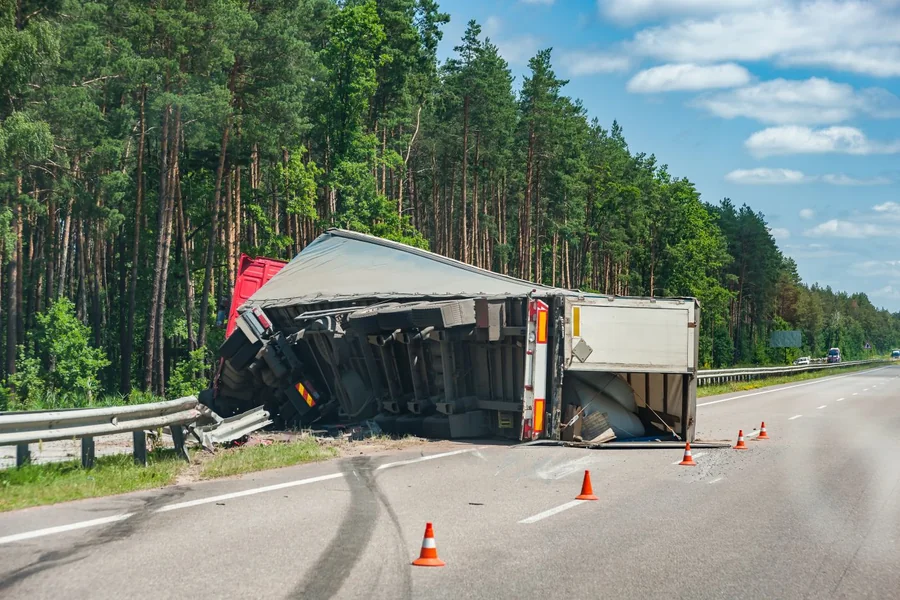
Every day, thousands of commercial trucks travel across U.S. highways carrying freight that can weigh tens of thousands of pounds. When that cargo is not loaded or secured correctly, the consequences for other drivers on the road can be severe. Understanding how improperly loaded cargo contributes to truck accidents can help victims recognize their rights and take action.
The Dangers of Unsecured Freight on Public Roads
How a Shifting Load Causes Accidents
A commercial truck is already a massive and complex vehicle to operate under normal conditions. When cargo inside a trailer shifts during transit, it can throw off the truck’s center of gravity in an instant. This sudden imbalance can cause the driver to lose control, swerve into other lanes, or even roll the vehicle entirely.
Unsecured loads can also spill onto the roadway, creating hazards for other motorists who have no time to react. Debris on a highway at highway speeds is a serious safety threat, and the truck driver or company responsible for that load may be legally liable for any resulting harm.
The Weight Problem
Overloading a truck creates a compounding set of risks that go beyond simple balance issues. When a trailer carries more weight than it is rated for, the truck’s axles are placed under extreme stress, increasing the risk of sudden mechanical failure while the vehicle is in motion.
Federal regulations cap the weight of commercial trucks at 80,000 pounds for good reason. Exceeding this limit makes the vehicle harder to steer, especially in bad weather conditions like heavy rain, snow, or strong winds. Drivers may find themselves unable to correct course fast enough when something goes wrong.
Brake Failure and Stopping Distance
One of the most dangerous consequences of overloaded or improperly secured cargo is what it does to a truck’s braking system. Excess weight puts enormous strain on brake components, and over time or under heavy use, that strain can lead to brake failure.
Even when brakes are functioning, heavier trucks need significantly more distance to come to a complete stop. If a truck is following another vehicle too closely and the driver must brake suddenly, that extra stopping distance can make a rear-end collision unavoidable.
Federal Regulations Designed to Prevent These Accidents
What the FMCSA Requires
The Federal Motor Carrier Safety Administration (FMCSA) has established clear rules about how cargo must be loaded and secured on commercial vehicles. These regulations exist specifically to reduce the risk of accidents caused by shifting or falling freight.
Drivers are required to inspect their cargo within the first 50 miles of a trip and then again at intervals of roughly 150 miles. This is especially important when transporting liquids, which can shift and slosh inside containers during transport. Catching a securement problem early can prevent an accident later.
Approved Securement Methods
The FMCSA does not leave cargo securement up to guesswork. Drivers must use approved fastening devices, including high-quality webbing, steel straps, and chain straps, to keep freight in place throughout the journey.
Inflatable bags are also required to fill empty spaces between loads inside trailers. These bags prevent cargo from shifting laterally during turns, braking, or sudden maneuvers. When these steps are skipped or done carelessly, the risk of an accident increases dramatically.
Who Is Responsible When Improperly Loaded Cargo Causes a Crash?
Multiple Parties Can Share Liability
Truck accident liability is rarely straightforward. Because multiple parties are involved in loading, securing, and transporting freight, more than one entity may bear legal responsibility when something goes wrong.
The truck driver is responsible for inspecting the load before and during the trip. The trucking company is responsible for training employees on proper loading procedures and ensuring compliance with FMCSA rules. Any third-party logistics company or loading crew that handled the cargo may also share in the liability.
When Training Falls Short
Trucking companies that fail to properly train their workers on load securement open themselves up to significant legal exposure. If an accident can be traced back to inadequate training or negligent oversight, the company may be held accountable for the resulting injuries and property damage.
Victims of these accidents are entitled to seek compensation for both economic and non-economic damages. That includes medical bills, lost wages, pain and suffering, and more.
Product Liability for Faulty Equipment
Sometimes, cargo shifts even when a driver follows every rule correctly. In these situations, the cause may be a defective securement device rather than human error. Webbing, tie-down straps, bungee cords, and anchors can all fail if they are manufactured with defects or sold without adequate quality control.
When a product failure is identified as the cause of a cargo shift and subsequent accident, the manufacturer or retailer of that equipment may be liable. A product liability claim can be filed separately or alongside other claims in the case.
What Injured Victims Should Do After a Truck Accident
Seek Medical Attention Immediately
The physical impact of a truck accident can be severe, and some injuries may not be immediately apparent. Seeking medical attention right away creates a record linking your injuries to the accident, which is important for any future legal claim.
Do not delay care, even if you feel relatively fine in the moments after a crash. Internal injuries and soft tissue damage can worsen significantly without prompt treatment.
Consult an Experienced Truck Accident Attorney
Truck accident cases are more complex than standard vehicle collisions. They involve federal regulations, multiple potentially liable parties, and insurance companies with significant resources. Having legal representation levels the playing field.
Working with an experienced personal injury law firm can make a meaningful difference in the outcome of your claim. A knowledgeable attorney will investigate the accident, gather evidence, identify all liable parties, and fight for the maximum compensation you deserve.
Do Not Wait to Take Action
There are deadlines for filing personal injury claims, and evidence from a truck accident can disappear quickly. Trucking companies may retain legal counsel and begin building their defense immediately after an accident occurs.
Acting promptly gives your truck accident attorney the best chance to build a strong case on your behalf. The sooner you reach out for help, the sooner the legal process can begin and the sooner you can focus on your recovery.